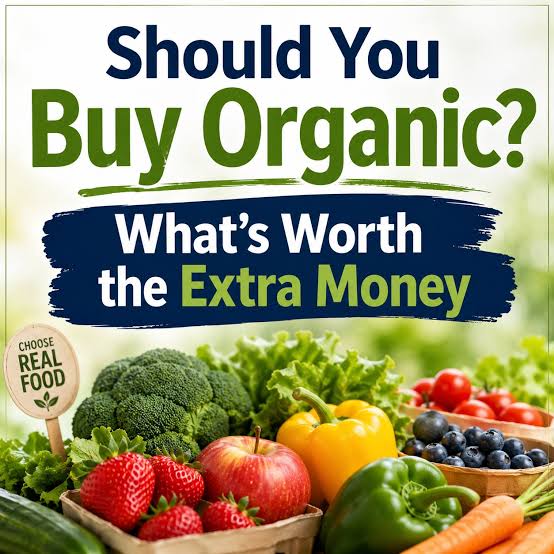
Walk into a supermarket or local food market, and you may notice that organic fruits, vegetables, eggs, and other products often cost more than conventional alternatives. Organic food is frequently associated with better nutrition, fewer synthetic pesticide residues, and environmentally friendly farming practices.
But does organic food actually offer enough benefits to justify the higher price? Or are you paying extra for a label?
The truth is more complicated than many advertisements suggest. Organic food has potential advantages, but conventional foods can also be nutritious and safe. Understanding the differences can help you make smarter choices for your health and budget.
1. What Does Organic Food Really Mean?
Organic food is produced according to specific farming and processing standards. These standards vary by country, but organic farming generally emphasizes ecological practices and restricts the use of many synthetic pesticides and fertilizers.
Depending on the certification system, organic farming may also involve:
- Crop rotation and practices that maintain soil fertility.
- Biological methods for controlling pests.
- Restrictions on genetically modified organisms.
- Rules governing livestock feed, housing, and access to outdoor areas.
- Limits on certain synthetic inputs during food production.
Organic does not mean that food is completely pesticide-free. Some approved pesticides, including certain naturally derived substances, may be used in organic agriculture.
It is also important to distinguish certified organic products from foods simply described as “natural” or “farm fresh.” Those phrases do not necessarily mean that a product meets organic certification standards.
2. Is Organic Food More Nutritious?
One of the biggest reasons people buy organic food is the belief that it contains more vitamins, minerals, and other beneficial nutrients.
However, scientific research does not show that organic food is consistently much more nutritious than conventional food across all products.
Some studies have found differences in particular nutrients or plant compounds, but the results vary depending on the crop, farming conditions, storage, and other factors.
For example, both organic and conventional vegetables can provide fiber, vitamins, minerals, and antioxidants.
The most important factor is often whether you eat enough nutritious food, rather than whether every item is organic.
Eating a variety of fruits, vegetables, whole grains, beans, nuts, and other nutrient-rich foods is generally more important than choosing organic versions exclusively.
If buying organic means you can afford fewer fruits and vegetables, conventional produce can still be an excellent choice.
3. Does Organic Food Contain Fewer Pesticides?
Pesticides are substances used to control insects, weeds, fungi, and other agricultural pests. Organic farming restricts many synthetic pesticides, while conventional farming permits a broader range of approved products.
Research generally suggests that people who consume organic foods tend to have lower exposure to certain synthetic pesticide residues.
However, this does not mean that every conventional food contains harmful levels of pesticides. Food safety authorities establish residue limits, and monitoring programs assess whether food complies with applicable standards.
Organic foods may also contain pesticide residues, including from approved organic pesticides or environmental contamination.
Washing fruits and vegetables under clean running water helps remove dirt and some surface residues, although it cannot remove every pesticide. Peeling may reduce some residues but can also remove fiber and nutrients found in the skin.
The practical lesson is to wash produce properly and eat a varied diet rather than avoiding fruits and vegetables because they are not organic.
4. Is Organic Food Better for the Environment?
Organic farming can offer environmental benefits, although the results depend on how farms are managed and which environmental factors are considered.
Potential benefits include:
- Soil health: Crop rotation, composting, and cover crops can improve soil structure and fertility.
- Biodiversity: Some organic farming systems support a greater variety of organisms, including beneficial insects.
- Reduced reliance on certain synthetic chemicals: Restrictions can reduce the use of some agricultural inputs.
- Water quality: Appropriate organic practices may reduce certain sources of chemical runoff.
However, organic farming is not automatically better in every environmental category.
Some organic farms produce less food per unit of land than conventional farms. If yields are lower, producing the same amount of food may require more land. Environmental outcomes also depend on energy use, irrigation, transportation, soil management, and the specific crops being grown.
Sustainable farming practices matter alongside the organic label.
5. Why Does Organic Food Cost More?
Organic products often carry higher prices for several reasons.
Higher production costs: Organic farmers may spend more on labor-intensive weed control, pest management, and soil management.
Certification expenses: Farms may need to pay for inspections, documentation, and compliance with organic standards.
Lower or less predictable yields: Some organic crops can be more vulnerable to pests or produce smaller harvests, depending on local conditions.
Supply and distribution: Organic products may be produced in smaller quantities or require separate handling to maintain certification.
Consumer demand: When demand exceeds available supply, prices may rise.
Nevertheless, the price difference varies by product, location, season, and retailer. Locally grown seasonal produce may sometimes be more affordable than imported organic alternatives.
6. Which Organic Foods Are Worth Considering?
There is no single list of organic foods that everyone should buy. Your choices should depend on your budget, preferences, availability, and priorities.
Consider these approaches:
- Prioritize variety: Buy a broad range of fruits and vegetables, whether organic or conventional.
- Compare local prices: Seasonal produce from nearby farmers may offer good value.
- Choose organic selectively: If reducing exposure to certain pesticide residues is important to you, you can prioritize organic products you eat frequently when affordable.
- Check certification: Look for a recognized certification label rather than relying only on marketing claims.
- Avoid unnecessary food waste: Buying food you can finish is often more beneficial to your budget than paying extra for products that spoil before you use them.
For households with limited budgets, frozen fruits and vegetables can also be practical options. They can provide important nutrients, and both organic and conventional frozen products are available in many markets.
7. Is Organic Food Safer?
Organic food is not automatically safer in every respect.
Both organic and conventional foods must meet applicable food safety requirements. Either type can become contaminated with harmful bacteria if it is grown, handled, transported, or stored improperly.
Organic certification primarily concerns how food is produced and processed; it is not a guarantee that a product is free of every chemical, microorganism, or potential hazard.
Good food hygiene remains essential. Wash produce, store food at appropriate temperatures, cook foods safely, and avoid consuming products that appear spoiled.
For most consumers, a balanced diet combined with safe food handling is a more dependable approach to health than relying on the organic label alone.
Final Thoughts
So, is organic food worth the extra money? The answer depends on what matters most to you.
Organic food can reduce exposure to certain pesticide residues and may support farming practices that benefit soil and biodiversity. However, it is not consistently more nutritious than conventional food, and its environmental advantages depend on the farming system.
If your budget allows, buying some organic products may align with your personal health or environmental priorities. But if organic prices make it difficult to afford a varied diet, conventional fruits, vegetables, grains, and other nutritious foods remain valuable choices.
The smartest food choice is not necessarily the most expensive one. It is the one that helps you eat well, stay within your budget, and make informed decisions about how your food is produced.