
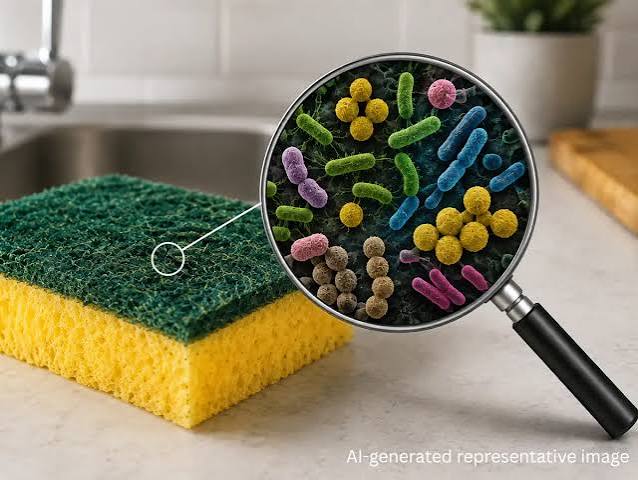
Your kitchen sponge may look clean, smell fresh, and appear harmless, but it can harbor a surprising number of microorganisms. Every day, it comes into contact with food scraps, dirty dishes, countertops, and other kitchen surfaces. When it stays damp and contains leftover food particles, it can become a suitable environment for bacteria to grow.
Some of these microorganisms are harmless, but others may include bacteria associated with foodborne illness. The concern is not simply that bacteria live in a sponge. It is that using the same sponge repeatedly can transfer microorganisms from one surface to another, potentially spreading contamination throughout your kitchen.
So, can your kitchen sponge spread harmful bacteria around your home? Yes, it can—but the level of risk depends on how you use, clean, dry, and replace it.
1. Why Kitchen Sponges Can Harbor Bacteria
Kitchen sponges are designed to absorb water, trap food particles, and scrub surfaces. Unfortunately, these same features can make them effective places for microorganisms to survive.
A sponge often remains damp for hours after washing dishes. Tiny food particles may become trapped deep inside its pores, providing nutrients that support microbial growth.
Warm kitchen environments can encourage the growth of certain microorganisms, particularly when a sponge is repeatedly used without being thoroughly cleaned and dried.
Research has found that used kitchen sponges can contain diverse microbial communities. However, finding bacteria in a sponge does not automatically mean it will make someone sick. The type of microorganism, its quantity, and the way it reaches food or people all influence the potential risk.
The main concern is how easily a contaminated sponge can transfer microorganisms to other places.
2. Harmful Bacteria May Be Transferred to Kitchen Surfaces
One of the biggest risks associated with a dirty sponge is cross-contamination.
Cross-contamination occurs when microorganisms move from one object or surface to another. For example, a sponge used to wipe up raw chicken juices could transfer bacteria to a countertop, kitchen utensil, or another surface if it is not properly cleaned or replaced.
Depending on the source of contamination, bacteria such as Salmonella, Campylobacter, and certain strains of Escherichia coli (E. coli) may be involved.
These microorganisms can cause foodborne illness when they reach food and are consumed in sufficient quantities.
The risk increases when the same sponge is used for multiple tasks, especially when cleaning up raw meat juices and then wiping surfaces used for ready-to-eat foods.
To reduce this risk, keep raw meat juices away from other foods and use appropriate cleaning methods for contaminated surfaces. A disposable paper towel can be useful for absorbing raw meat juices, provided it is discarded immediately and the surface is subsequently cleaned and disinfected as appropriate.
3. Your Sponge Can Spread Germs Beyond the Sink
The kitchen sink is not the only place where sponge-related contamination can occur.
If you use the same sponge on dishes, countertops, refrigerator handles, cupboard doors, and other frequently touched surfaces, microorganisms may move between them.
Consider this common scenario: you wipe a countertop after preparing raw meat, rinse the sponge quickly, and then use it to clean a table where someone will eat. If harmful bacteria remain in the sponge, they may be transferred to the table.
Similar problems can occur when a sponge is used to clean a cutting board and then reused on kitchen equipment without proper sanitation.
This does not mean every sponge spreads dangerous germs throughout the house. It means that using one sponge indiscriminately for many cleaning tasks creates avoidable opportunities for cross-contamination.
A simple rule: Use separate cleaning tools for dishes, food-preparation surfaces, and general household cleaning.
4. A Bad Smell Is Not the Only Warning Sign
Many people replace their kitchen sponge only when it begins to smell unpleasant or fall apart. However, smell is not a reliable indicator of whether a sponge contains harmful microorganisms.
A sponge can harbor bacteria without producing a noticeable odor. Conversely, an unpleasant smell may result from microbial growth and trapped food debris, even when the organisms present are not especially dangerous.
The appearance of a sponge also cannot tell you which microorganisms are present.
Rinsing a sponge under running water may remove some visible food particles, but it does not necessarily eliminate microorganisms trapped inside its structure.
For this reason, keeping a sponge looking clean is not enough. Proper cleaning, drying, sensible use, and regular replacement are all important parts of kitchen hygiene.
5. Could a Dirty Sponge Make Your Family Sick?
A contaminated sponge can contribute to foodborne illness if harmful microorganisms are transferred to food, utensils, or surfaces and then reach a person’s mouth.
Symptoms of foodborne illness may include diarrhea, stomach cramps, nausea, vomiting, and fever. Symptoms vary depending on the organism involved and may begin hours or days after exposure.
Young children, older adults, pregnant people, and individuals with weakened immune systems may face a greater risk of severe illness from certain foodborne pathogens.
However, it is important to maintain perspective. The presence of bacteria in a kitchen sponge does not mean that illness is inevitable. The risk depends on whether dangerous organisms are present, whether they spread, and whether enough exposure occurs to cause infection.
Good food-handling practices, proper cooking, handwashing, and safe cleaning routines all help reduce the overall risk.
If someone develops severe diarrhea, bloody stools, persistent vomiting, a high fever, or signs of dehydration, they should seek medical advice promptly.
6. Why Rinsing Your Sponge May Not Be Enough
After washing dishes, many people quickly rinse their sponge and leave it beside the sink. Although this removes some food debris, it may leave microorganisms behind.
The porous structure of a sponge creates small spaces where bacteria can remain protected from a quick rinse.
Dish soap helps loosen grease and remove dirt, but simply adding soap and squeezing the sponge does not guarantee that harmful bacteria have been eliminated.
Leaving a sponge in a pool of dirty water or inside a closed container while it is still wet can also slow drying and encourage microbial growth.
A better routine is to remove visible food debris, wash the sponge thoroughly, squeeze out excess water, and place it somewhere with good airflow so it can dry between uses.
Even with careful maintenance, a sponge should not be treated as a permanently sanitary cleaning tool.
7. How to Clean and Disinfect Your Kitchen Sponge Safely
There are several ways to reduce microbial contamination, but no method should be assumed to make a sponge completely germ-free.
Here are practical steps to improve kitchen hygiene:
Remove food debris. After use, rinse the sponge thoroughly to remove trapped food particles.
Squeeze out excess water. A sponge that dries more quickly is generally less favorable for the growth of many bacteria than one that remains constantly wet.
Allow it to dry completely. Store it in a well-ventilated holder rather than leaving it in a wet sink or sealed container.
Consider a suitable disinfection method. Some household guidance supports using a dishwasher’s hot wash and drying cycle for compatible sponges. However, effectiveness depends on the appliance, cycle, sponge material, and degree of contamination. Follow the manufacturer’s instructions and public-health guidance.
Never mix cleaning chemicals. In particular, never mix bleach with ammonia, acids such as vinegar, or other cleaning products. Dangerous gases or reactions can result.
Replace worn or persistently dirty sponges. If a sponge smells bad, remains greasy, breaks apart, or cannot be cleaned effectively, discard it. Replace it sooner if it has been used to clean up potentially hazardous contamination.
Microwaving a sponge is sometimes suggested as a disinfection method, but it is not a foolproof solution. A sponge can contain dry areas that do not heat evenly, and some materials may melt or catch fire. Never microwave a sponge containing metal, and do not rely on this method as a substitute for sensible replacement and safe cleaning practices.
8. When Should You Replace Your Kitchen Sponge?
There is no single replacement schedule that suits every household. How often you need a new sponge depends on how frequently it is used, what it cleans, how well it dries, and whether it becomes damaged or contaminated.
If you cook frequently, handle raw meat regularly, or use the sponge for many different tasks, you may need to replace it more often.
Rather than waiting for a sponge to become visibly disgusting, make replacement part of your regular cleaning routine.
You can also consider alternatives that dry more quickly, such as washable dishcloths that can be laundered thoroughly and dried completely. Brushes may be useful for dishes because they are often easier to rinse and dry than thick sponges. However, these alternatives still require regular cleaning and replacement when necessary.
The goal is not to create a completely bacteria-free kitchen—something that is unrealistic—but to reduce the chances of harmful microorganisms spreading to food and surfaces.
9. Everyday Habits That Help Keep Your Kitchen Safer
Small changes to your cleaning routine can make a meaningful difference.
- Wash your hands with soap and water after handling raw meat, poultry, seafood, or eggs.
- Use separate cutting boards for raw animal products and ready-to-eat foods.
- Clean food-contact surfaces after preparing raw ingredients.
- Avoid using a dish sponge to wipe up raw meat juices.
- Keep dishwashing tools separate from cloths used for floors, bathrooms, or other household areas.
- Wash reusable dishcloths regularly using an appropriate laundry cycle and dry them thoroughly.
- Store cleaning tools where they can drain and dry between uses.
- Follow food-safety instructions for cleaning and disinfecting surfaces that may have been exposed to raw animal products.
These habits work together. Even a recently replaced sponge cannot protect you from every source of food contamination if other kitchen hygiene practices are neglected.
Final Thoughts
Your kitchen sponge may be small, but the way you use it can influence how microorganisms move around your kitchen. Its damp, porous structure can support bacterial growth, and using the same sponge for multiple cleaning tasks may transfer contamination to dishes, countertops, and food-preparation areas.
Fortunately, reducing the risk does not require expensive products or complicated routines. Remove food debris, allow cleaning tools to dry thoroughly, use separate tools for different tasks, follow safe disinfection guidance, and replace sponges regularly.
Most importantly, do not judge a sponge’s safety by its smell or appearance alone. Clean-looking sponges can still harbor microorganisms, and proper food handling remains essential.
The takeaway: A kitchen sponge is useful, but it should never become a vehicle for spreading contamination. Good cleaning habits and timely replacement can help keep your kitchen safer for everyone.