
Every time you take a breath, air travels into your lungs, delivering the oxygen your body needs to function. But when the air contains harmful pollutants, that same process can expose your body to substances that affect your health in ways you may not immediately notice.
Air pollution is often associated with traffic fumes, factory emissions, smoke from burning waste, and dusty environments. However, polluted air can also come from indoor sources, including cooking with solid fuels, tobacco smoke, and poorly ventilated spaces.
The health effects depend on the type of pollutant, its concentration, how long you are exposed, and your individual health. Some pollutants irritate the eyes and airways, while others can enter the bloodstream or trigger inflammation that affects organs throughout the body.
Understanding how air pollution travels through your body can help you recognize potential risks and take practical steps to reduce exposure.
1. How Air Pollution Enters Your Body
Your respiratory system is the main route through which air pollution enters your body. When you inhale, air passes through your nose or mouth, travels down your windpipe, and enters the branching airways of your lungs.
Air contains a mixture of gases and particles. In polluted environments, this mixture may include fine particulate matter, nitrogen dioxide, ground-level ozone, carbon monoxide, and other harmful substances.
The effects depend partly on the size and chemical composition of the pollutants.
Larger particles may be trapped in the nose and upper airways, where mucus and tiny hair-like structures help remove foreign material. Smaller particles can travel deeper into the lungs, reaching the tiny air sacs called alveoli, where oxygen normally passes into the blood.
Some fine and ultrafine particles can interact with lung tissue and contribute to inflammation. Certain components of particulate pollution and some pollutants themselves may enter the bloodstream or trigger signals that affect other organs.
This is one reason air pollution is considered a whole-body health concern rather than simply a lung problem.
2. Your Lungs Are Often the First Organs Affected
Your lungs receive the greatest direct exposure to polluted air, making them especially vulnerable.
When you breathe in polluted air, some substances irritate the lining of your airways. This can cause inflammation, increase mucus production, and make breathing uncomfortable.
Short-term exposure to high levels of pollution may lead to symptoms such as coughing, wheezing, throat irritation, chest tightness, or shortness of breath.
People with asthma or chronic obstructive pulmonary disease (COPD) may experience worsening symptoms during periods of poor air quality.
Long-term exposure to certain pollutants is associated with reduced lung function and an increased risk of developing or worsening respiratory diseases. Outdoor air pollution is also recognized as a cause of lung cancer.
Children are particularly vulnerable because their lungs are still developing, and they may breathe more air relative to their body weight than adults.
Protecting your lungs begins with reducing exposure whenever air quality is poor and avoiding additional sources of respiratory irritation, such as tobacco smoke.
3. Fine Particles Can Reach Deep Inside Your Lungs
Not all air pollution particles behave the same way. Their size helps determine where they settle in your respiratory system.
Particulate matter is commonly classified according to particle diameter:
- PM10: Particles measuring 10 micrometers or less. These can enter the respiratory tract and reach parts of the lungs.
- PM2.5: Fine particles measuring 2.5 micrometers or less. These can travel deep into the lungs and are associated with important cardiovascular and respiratory health risks.
- Ultrafine particles: Extremely small particles that may interact with lung tissue and biological systems in ways that depend on their composition and exposure conditions.
PM2.5 can come from vehicle emissions, industrial combustion, fires, and the burning of wood, charcoal, or other fuels. The exact sources vary by location.
Because these particles are so small, they cannot always be seen with the naked eye. Air that looks clear may still contain harmful levels of fine particulate pollution.
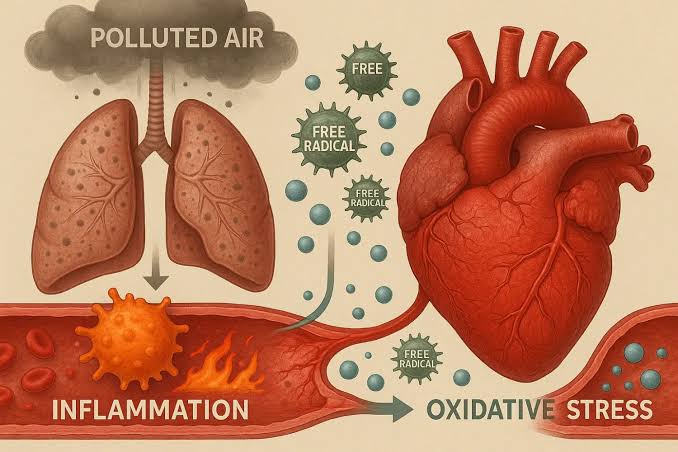
Once particles reach the deepest parts of the lungs, they can activate immune cells and contribute to oxidative stress, a process involving an imbalance between harmful reactive molecules and the body’s protective systems.
These responses can affect lung tissue and may also contribute to inflammation beyond the respiratory system.
4. Air Pollution Can Affect Your Heart and Blood Vessels
One of the most important discoveries in environmental health is that air pollution can affect the cardiovascular system.
Exposure to fine particulate matter is associated with an increased risk of heart attacks, strokes, and other cardiovascular problems. Researchers believe several mechanisms contribute to these effects.
First, inflammation in the lungs can trigger signals that influence the rest of the body. Second, air pollution may contribute to oxidative stress and changes in the function of blood vessels. Third, some exposures can affect the autonomic nervous system, which helps regulate heart rate and blood pressure.
Pollution may also contribute to processes involved in the development or destabilization of atherosclerosis, a condition in which fatty deposits build up in artery walls.
The risk is especially concerning for people with existing heart disease, high blood pressure, diabetes, or other cardiovascular risk factors.
The effects do not mean that every exposure will cause a heart problem. Rather, repeated or substantial exposure can increase risk across populations, particularly when pollution levels are high.
Reducing exposure is therefore one useful part of protecting cardiovascular health, alongside other measures such as not smoking, staying physically active when conditions allow, and managing blood pressure.
5. Your Brain May Also Be Affected
Your brain depends on a steady supply of oxygen and nutrients delivered through a network of blood vessels. Air pollution may affect brain health through several interconnected pathways.
Inflammation and oxidative stress associated with pollution can influence blood vessels and biological processes that support normal brain function. Researchers are also investigating how certain fine and ultrafine particles may interact with protective barriers around the brain.
Long-term exposure to air pollution has been associated in research with an increased risk of stroke and has been linked to cognitive decline and dementia. However, the strength of evidence and the precise biological mechanisms vary by outcome and pollutant.
These findings do not mean that a person exposed to polluted air will necessarily develop a neurological condition. Many factors influence brain health, and observational associations do not always establish the exact contribution of pollution in an individual case.
Nevertheless, reducing long-term exposure may be beneficial for overall health, including the health of the brain and its blood vessels.
Children may also be vulnerable because their brains and nervous systems are still developing.
6. Air Pollution Can Affect Your Blood and Circulation
The blood carries oxygen, nutrients, hormones, and immune cells throughout your body. Some forms of air pollution can influence how this transport system functions.
For example, carbon monoxide is a harmful gas produced by incomplete combustion, including from vehicle exhaust and faulty fuel-burning appliances. When inhaled, it binds to hemoglobin in red blood cells, reducing the blood’s ability to carry oxygen.
High carbon monoxide exposure can cause headache, dizziness, weakness, nausea, confusion, and, in severe cases, death.
Other pollutants may contribute to inflammation, changes in blood vessel function, and processes associated with increased blood clotting risk.
This helps explain why air pollution can affect organs far beyond the lungs.
Important safety note: Carbon monoxide is colorless and odorless. If you suspect exposure indoors, move to fresh air immediately and seek emergency assistance. Do not re-enter the building until it has been declared safe.
7. Your Immune System Can React to Polluted Air
Your immune system protects you against infections and other threats. When you inhale polluted air, certain particles and gases can irritate tissues and activate immune responses.
A short-term response may help the body deal with an exposure. However, repeated exposure can contribute to ongoing inflammation in the airways and other biological systems.
Pollution can also interfere with the normal defenses of the respiratory tract, including the mucus and tiny cilia that help remove inhaled particles and microorganisms.
For people with asthma, air pollution may trigger airway inflammation and make symptoms worse. Other respiratory conditions may also become more difficult to manage when pollution levels rise.
Air pollution is not the same as an infectious disease, and it does not automatically cause an infection. However, its effects on respiratory defenses and inflammation may influence susceptibility to certain respiratory problems.
If you have a chronic lung condition, follow your treatment plan and pay attention to local air-quality information when available.
8. Air Pollution Can Affect Pregnancy and Early Development
Exposure to polluted air is a concern during pregnancy because the developing fetus depends on the mother’s health and the efficient delivery of oxygen and nutrients.
Research has associated exposure to particulate matter and certain gaseous pollutants during pregnancy with an increased risk of outcomes such as preterm birth and low birth weight. The magnitude of risk varies with the pollutant, exposure level, timing, and other factors.
Possible explanations include inflammation, effects on blood vessels, and changes in the functioning of the placenta. Researchers continue to investigate the precise mechanisms involved.
Pregnant people cannot always avoid pollution completely, particularly in cities or areas where household cooking produces smoke. However, reducing avoidable exposure may help.
Practical steps include avoiding indoor tobacco smoke, improving ventilation when outdoor conditions permit, using cleaner cooking fuels where possible, and reducing strenuous outdoor activity during periods of very poor air quality.
People who are pregnant and have concerns about exposure should discuss them with a healthcare professional, especially if they experience breathing difficulties or other concerning symptoms.
9. Indoor Air Pollution Can Be Just as Important
When people think about air pollution, they often imagine busy roads and industrial areas. Yet the air inside homes can also contain harmful pollutants.
Indoor pollution may come from:
- Burning wood, charcoal, coal, kerosene, or other fuels for cooking and heating.
- Tobacco smoke and smoke from other combustible products.
- Poorly vented gas stoves and fuel-burning appliances.
- Candles, incense, and other sources of combustion.
- Outdoor pollution entering through windows, doors, and ventilation systems.
- Dust and certain chemicals released by household products or building materials.
In households that rely on solid fuels for cooking, smoke may expose family members to substantial levels of fine particles and other harmful substances.
Improving indoor air quality can involve switching to cleaner cooking energy where feasible, venting combustion products outdoors, maintaining fuel-burning appliances, avoiding indoor smoking, and using suitable ventilation.
Opening windows may help when outdoor air is cleaner, but it can worsen exposure when pollution outside is high. The best approach depends on the source of pollution and the conditions around your home.
10. How to Reduce Your Exposure to Air Pollution
You cannot control every source of pollution, but practical steps can help reduce your exposure.
Check air-quality information. When reliable local air-quality reports are available, use them to plan outdoor activities.
Adjust exercise during pollution peaks. On days with poor air quality, consider reducing strenuous outdoor exercise, shortening the duration, or moving the activity indoors if indoor air is cleaner.
Avoid traffic-heavy routes when possible. Choosing quieter streets away from busy roads may reduce exposure during walking or cycling, although it cannot eliminate it.
Reduce smoke inside your home. Avoid smoking indoors and improve the ventilation of cooking and heating appliances. Cleaner cooking fuels can substantially reduce household air pollution.
Consider a suitable air cleaner. A correctly sized portable air cleaner with a high-efficiency particulate air (HEPA) filter can reduce airborne particles indoors. It does not remove every gaseous pollutant, and its effectiveness depends on room size, operation, and maintenance.
Use masks appropriately. A well-fitting particulate respirator, such as an N95 or equivalent, can reduce inhalation of fine particles when correctly fitted. Ordinary cloth masks are generally less reliable for this purpose. Particulate respirators do not protect against gases such as carbon monoxide.
Protect vulnerable people. Children, older adults, pregnant people, and those with heart or lung disease may need to take extra precautions during high-pollution periods.
Support cleaner environments. Cleaner transport, reduced open burning, effective industrial controls, and cleaner household energy can help reduce pollution exposure across entire communities.
No single measure eliminates all risk, but combining sensible personal precautions with broader pollution reduction can make a meaningful difference.
Final Thoughts
Air pollution is more than an environmental problem. It can affect the body through the lungs, influence inflammation and blood vessel function, and contribute to health risks involving the heart, brain, and other organs.
The effects depend on the type and concentration of pollutants, the duration of exposure, and a person’s health. Some consequences may appear quickly, while others are associated with long-term exposure and may develop gradually.
Although it is impossible to avoid all polluted air, understanding its sources can help you make better decisions about ventilation, cooking, exercise, and outdoor activities.
Reducing exposure is especially important for children, pregnant people, older adults, and those living with existing heart or lung conditions.
The key lesson is simple: Every breath matters. Protecting the air you breathe is an important step toward protecting your lungs, your heart, your brain, and your long-term health.