
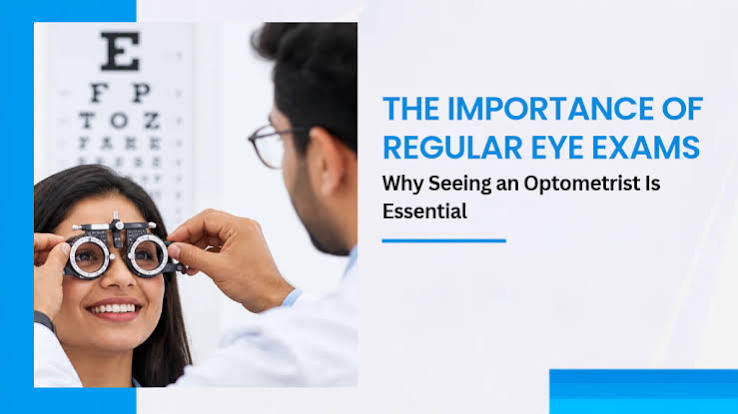
You can read a book, recognize faces across a room, use your phone comfortably, and drive without noticing any problems with your eyesight. But does that mean your eyes are completely healthy?
Not necessarily.
Many people assume that eye examinations are only necessary when their vision becomes blurry or they begin experiencing headaches. In reality, several eye conditions can develop gradually without causing noticeable symptoms in their early stages. By the time vision changes become obvious, some damage may already have occurred.
Regular eye examinations help assess more than how clearly you can see. They can identify changes in eye health, detect certain diseases before symptoms appear, and sometimes reveal signs of broader health problems.
Understanding why these examinations matter can help you protect your vision and recognize when professional eye care is needed.
1. Good Vision Does Not Always Mean Healthy Eyes
One of the biggest misconceptions about eye health is that clear vision automatically means your eyes are healthy.
Visual sharpness is only one part of eye function. Your eyes also contain structures that help control how much light enters, focus images, process visual information, and maintain healthy tissues.
Some conditions affect these structures without immediately changing your ability to read or recognize objects.
For example, certain forms of glaucoma can damage the optic nerve gradually while a person’s central vision remains relatively clear. Early diabetic eye disease may also cause no obvious symptoms, even when changes are occurring inside the eye.
An eye examination allows an eye care professional to assess aspects of eye health that you cannot reliably evaluate yourself.
Depending on your needs, an examination may include checking visual acuity, measuring eye pressure, assessing eye movements, examining the retina, and evaluating the optic nerve.
Not every person needs every test at every visit. The appropriate assessment depends on age, medical history, risk factors, and the findings of previous examinations.
The important point is that clear eyesight is not a guarantee that every part of your eyes is healthy.
2. Regular Exams Can Help Detect Glaucoma Early
Glaucoma is a group of eye conditions that can damage the optic nerve, which carries visual information from the eye to the brain.
One common form, primary open-angle glaucoma, often develops gradually. It may cause no noticeable symptoms in its early stages because the loss of vision typically begins in the peripheral visual field.
A person may continue reading, using a computer, and recognizing faces while gradual damage is occurring.
As the condition progresses, peripheral vision can become increasingly affected. Advanced glaucoma can cause substantial and sometimes irreversible vision loss.
Elevated pressure inside the eye is an important risk factor for many types of glaucoma, but glaucoma can also occur when measured eye pressure is within the usual range.
This is why measuring eye pressure alone cannot rule out the disease.
An eye care professional may assess the optic nerve, examine the visual field, measure eye pressure, and use imaging or other tests when indicated.
People with a family history of glaucoma, older adults, and certain other higher-risk groups may need closer monitoring.
Early detection is important because treatment can often slow or prevent further damage, although existing optic nerve damage generally cannot be reversed.
3. Diabetes Can Affect Your Eyes Before You Notice Symptoms
Diabetes can damage the small blood vessels in the retina, the light-sensitive tissue at the back of the eye. This condition is called diabetic retinopathy.
In its early stages, diabetic retinopathy may cause no obvious changes in vision. Nevertheless, changes in retinal blood vessels can develop over time and may progress if the condition is not detected and managed.
More advanced disease can cause blurred vision, dark spots, bleeding inside the eye, or serious vision loss.
Diabetes can also increase the risk of other eye problems, including diabetic macular edema, certain types of glaucoma, and cataracts.
A comprehensive eye examination that includes an appropriate retinal assessment can help identify diabetic eye disease before symptoms become noticeable.
People with diabetes should follow recommended schedules for retinal screening or comprehensive eye examinations, even when their eyesight seems normal.
Blood glucose management, blood pressure control, and appropriate medical care can help reduce the risk of complications.
If you have diabetes and notice sudden changes in vision, new floaters, flashes, or a dark curtain across your vision, seek urgent medical attention rather than waiting for your next scheduled appointment.
4. Cataracts Can Develop Gradually Without Early Warning Signs
A cataract occurs when the natural lens inside the eye becomes cloudy. This can make vision appear blurred, faded, or less sharp.
Cataracts are commonly associated with aging, although they can also develop earlier because of factors such as eye injuries, certain medications, and some medical conditions.
Early cataracts may cause little noticeable disruption. Over time, however, you might begin struggling with glare, finding it harder to see at night, or noticing that colors appear less vivid.
An eye examination can help identify lens changes and determine whether they are affecting your vision.
Not every cataract requires immediate treatment. In many cases, updating glasses or improving lighting may help temporarily. Surgery may be considered when the cataract begins interfering significantly with everyday activities.
Regular eye care helps establish whether changes are occurring and allows you to discuss appropriate options before your vision problems become more disruptive.
5. Eye Exams Can Reveal Changes in Your Prescription
Even if you can see reasonably well, your visual prescription may change over time.
Nearsightedness, farsightedness, and astigmatism can make focusing difficult. Age-related changes in the ability to focus on nearby objects, known as presbyopia, are also common.
Some people gradually adapt to mild changes and do not realize how much their vision has deteriorated until they receive updated glasses or contact lenses.
You may notice subtle signs such as squinting, holding your phone farther away, struggling to read small print, or needing brighter light to see comfortably.
An eye examination can identify refractive errors and help determine whether glasses, contact lenses, or another approach would improve your vision.
Correcting a prescription may make reading, driving, studying, and working more comfortable.
However, headaches and difficulty concentrating are not always caused by vision problems. If these symptoms persist despite appropriate correction, further assessment may be necessary.
6. Your Eyes May Show Signs of Other Health Problems
The eyes contain blood vessels, nerves, and other tissues that can reflect aspects of general health.
During certain eye examinations, a professional may identify findings that suggest a need for further medical evaluation.
For example, changes in retinal blood vessels may be associated with diabetes or high blood pressure. Certain inflammatory conditions and other systemic diseases can also affect the eyes.
In some circumstances, examination findings may prompt a healthcare professional to recommend additional tests or referral to another specialist.
However, an eye examination cannot diagnose every medical condition, and normal eye findings do not rule out diseases elsewhere in the body.
You should not rely on an eye exam as a substitute for routine medical checkups, blood pressure measurements, diabetes screening, or other recommended preventive care.
Instead, think of eye care as one part of maintaining your overall health. When relevant abnormalities are found, communicating with your other healthcare professionals can help ensure that appropriate follow-up occurs.
7. Children Need Eye Exams Even If They Do Not Complain
Children may not recognize that their vision is impaired because they have never experienced anything different.
A child with an undetected vision problem might struggle to read the board at school, lose interest in reading, hold books unusually close, or have difficulty concentrating on visual tasks.
However, some children show few obvious signs. They may assume that everyone sees the world as they do.
Vision problems during childhood can interfere with learning and development. Certain conditions, including amblyopia, commonly called lazy eye, are particularly important to identify early because treatment is generally more effective during childhood.
Routine vision screening is valuable, but screening does not identify every eye problem. A child who fails a screening test, has symptoms, or has relevant risk factors may need a comprehensive examination.
Parents and caregivers should follow local recommendations for childhood vision screening and eye examinations.
If a child frequently squints, closes one eye, complains of headaches during visual tasks, or has difficulty seeing clearly, arrange an appropriate assessment.
Early attention to vision can support a child’s comfort, learning, and visual development.
8. Screen Use Makes Eye Comfort Worth Paying Attention To
Phones, computers, tablets, and other digital devices are part of everyday life. Extended screen use can contribute to digital eye strain, which may involve tired eyes, temporary blurred vision, dryness, irritation, or headaches.
People often blink less frequently when concentrating on screens. This can contribute to dry-eye symptoms, especially in air-conditioned environments or places with low humidity.
Long periods of close-up work may also cause discomfort, particularly when the viewing distance, lighting, or prescription is unsuitable.
Regular eye examinations can help identify refractive errors and assess persistent eye discomfort. However, digital eye strain does not automatically indicate permanent eye damage, and routine eye exams cannot prevent every screen-related symptom.
You can support eye comfort by taking regular breaks, looking at distant objects periodically, blinking fully, adjusting screen brightness, and keeping the screen at a comfortable distance.
A commonly used approach is the 20-20-20 rule: approximately every 20 minutes, look at something about 20 feet away for 20 seconds.
If dryness, pain, or blurred vision continues despite these adjustments, consult an eye care professional to investigate possible causes.
9. How Often Should You Have an Eye Examination?
There is no single examination schedule that is right for everyone.
The appropriate frequency depends on your age, existing eye conditions, medical history, family history, and whether you wear glasses or contact lenses.
A person with diabetes or glaucoma may need examinations much more frequently than someone with no known eye problems. Children also have different screening and examination needs from adults.
As a general guide:
- Children: Follow age-appropriate vision screening and examination recommendations, particularly during early development and school years.
- Young and middle-aged adults: Arrange examinations according to symptoms, risk factors, vision needs, and professional advice.
- Older adults: Regular assessments become increasingly important because the risk of conditions such as cataracts, glaucoma, and age-related macular degeneration rises with age.
- People with diabetes or known eye disease: Follow the examination schedule recommended by their eye care professional.
These are broad categories rather than fixed intervals. Your own schedule may need to be different.
If you have not had an eye examination for many years, arranging one can be a useful step even if your eyesight seems unchanged.
10. What Happens During a Comprehensive Eye Exam?
An eye examination is usually straightforward, although the exact tests vary according to your needs.
Your eye care professional may ask about your medical history, medications, family history of eye disease, and any symptoms you have noticed.
The examination may include several of the following:
- Visual acuity testing: Checks how clearly you can see letters or symbols at different distances.
- Refraction testing: Helps determine whether glasses or contact lenses could correct focusing problems.
- Eye movement and alignment checks: Assess how your eyes move and work together.
- Eye pressure measurement: Helps assess glaucoma risk, although pressure alone cannot diagnose or exclude the condition.
- Slit-lamp examination: Uses magnification and a focused light to examine structures at the front of the eye.
- Retinal and optic nerve assessment: Evaluates the back of the eye and may require pupil dilation.
- Additional tests: Depending on the findings, testing may include visual field assessment, retinal imaging, or other specialized investigations.
Pupil dilation can temporarily cause blurred near vision and increased sensitivity to light. Ask your eye care professional what to expect and whether you should arrange transport afterward.
A comprehensive examination is not simply a test to determine whether you need glasses. It also helps assess the health of your eyes and identify concerns that may require monitoring or treatment.
11. Warning Signs You Should Never Ignore
Routine eye examinations are important, but certain symptoms require prompt or urgent medical attention rather than waiting for a scheduled appointment.
Seek urgent eye care if you experience:
- Sudden loss or significant deterioration of vision.
- A sudden increase in floaters, especially with flashes of light or a shadow resembling a curtain.
- Severe eye pain, particularly with redness, headache, nausea, or blurred vision.
- New double vision or sudden changes in visual function.
- An eye injury involving chemicals, a penetrating object, or significant trauma.
Sudden visual changes can sometimes indicate conditions that threaten sight or reflect a broader medical emergency.
For chemical exposure, begin rinsing the eye immediately with clean, lukewarm running water and seek urgent medical advice. Do not delay irrigation while trying to find a specialized solution.
If you develop new but less severe symptoms, such as persistent blurred vision, recurring headaches associated with visual tasks, or ongoing dryness, arrange an appropriate assessment.
Recognizing warning signs and seeking care promptly can make a meaningful difference in the outcome of some eye conditions.
Final Thoughts
Regular eye examinations are an important part of protecting your vision, even when you believe you can see perfectly.
Conditions such as glaucoma, diabetic retinopathy, and early cataracts may develop with few noticeable symptoms. Eye examinations can also identify changes in your prescription, assess children’s visual development, and sometimes reveal signs that deserve further medical investigation.
The right examination schedule depends on your individual risk factors, age, and medical history. Following professional recommendations is more reliable than waiting until your eyesight begins to deteriorate.
Alongside regular examinations, protect your eyes from injury, manage health conditions such as diabetes, use appropriate eye protection when needed, and seek urgent care for sudden or severe symptoms.
The key takeaway: Do not wait for blurry vision to take your eye health seriously. Regular eye examinations can help identify problems early, guide appropriate treatment, and protect your ability to see clearly throughout life.