Imagine a construction site where robots lay bricks, machines print walls layer by layer, and automated systems move heavy building materials with remarkable precision. Instead of dozens of workers performing every task manually, advanced machines work alongside a smaller human team to construct a house in a fraction of the usual time.
This is no longer just science fiction. Construction robots, automated bricklaying machines, and large-scale 3D printers are already being used in some building projects around the world. These technologies promise to change how homes are designed, constructed, and delivered.
The potential benefits are significant. Faster construction could help address housing shortages, while automation might reduce certain labor costs, material waste, and dangerous working conditions. However, building a home involves much more than assembling walls. Foundations, plumbing, electrical systems, roofing, inspections, and finishing work all require careful planning and execution.
So, can robots genuinely build homes faster and cheaper than humans? The answer depends on the type of technology, the complexity of the house, local labor costs, building regulations, and the conditions at the construction site.
Here is how construction robots work, what they can already do, and whether they could transform the future of housing.
1. How Are Robots Changing the Construction Industry?
<AsyncImage query=”construction robot automated bricklaying machine building brick wall at residential construction site” aspectRatio=”16:9″ width=”100%” />
Construction has traditionally depended heavily on human labor. Workers measure materials, carry supplies, lay bricks, pour concrete, install components, and complete finishing tasks using specialized tools and equipment.
Robotics introduces machines that can perform some of these activities automatically or with assistance from human operators.
Different construction robots are designed for different purposes. Some lay bricks according to digital plans, while others weld metal components, inspect structures, move materials, or assist with concrete placement.
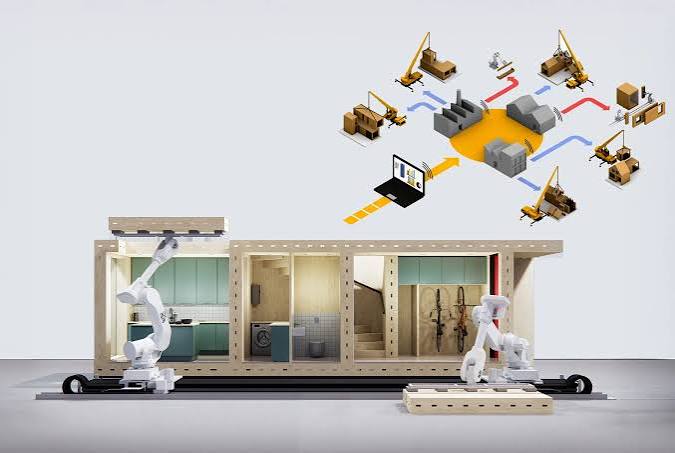
Some systems operate directly on construction sites, while others manufacture building components in factories before transporting them to the site for assembly.
The technologies involved can include robotic arms, sensors, cameras, computer vision, positioning systems, and software that interprets digital building plans.
Artificial intelligence can also help certain robots recognize objects, adapt to changing conditions, or detect errors during construction.
However, construction automation is not yet capable of independently completing every aspect of a typical home in most settings. Many systems specialize in individual tasks and require human supervision, maintenance, and coordination with other workers.
The main goal is not necessarily to eliminate people from construction. It is to automate suitable tasks so that projects can be completed more efficiently, safely, and consistently.
2. Can Robots Build Houses Faster Than Human Workers?
Speed is one of the most attractive potential benefits of construction robotics.
A conventional bricklayer must position each brick, apply mortar, check alignment, and repeat the process across a wall. An automated bricklaying system can perform some of these repetitive movements continuously, potentially increasing the rate at which certain walls are completed.
Similarly, large-scale 3D construction printers can deposit specially formulated building material layer by layer to create selected wall structures.
These systems can reduce the time needed for particular construction activities, especially when the design is standardized and the equipment can operate without frequent interruptions.
However, the speed of a robot on one task does not automatically determine how quickly an entire house can be completed.
A building project also requires site preparation, foundations, structural connections, plumbing, electrical installations, windows, doors, roofing, insulation, waterproofing, inspections, and interior finishes.
Delays in obtaining permits, delivering materials, connecting utilities, or coordinating contractors can also affect the schedule.
For this reason, a robot might complete a wall in hours while the overall house still takes weeks or months to finish.
The biggest time savings are likely to come when robotic construction is integrated into a well-organized building process rather than used as a standalone machine.
3. Can Robots Make Housing Cheaper?
<AsyncImage query=”modern automated construction 3D printer extruding concrete wall for small residential house” aspectRatio=”16:9″ width=”100%” />
The possibility of reducing construction costs is another reason builders are interested in automation.
Robots may lower certain labor expenses by completing repetitive tasks with fewer workers. They may also improve consistency, reduce some types of material waste, and shorten project schedules.
For example, a robotic system that places materials accurately may reduce the amount of rework required when compared with a poorly controlled manual process.
Shorter construction periods can also reduce some financing, equipment-rental, and site-management costs.
Nevertheless, automation comes with its own expenses.
Construction robots may require substantial upfront investment, specialized software, trained operators, regular maintenance, replacement parts, and reliable power supplies. Some machines are economical only when used frequently across multiple projects.
A small builder constructing one house may find it cheaper to hire experienced local workers than to purchase expensive robotic equipment.
A large developer building hundreds of similar homes, on the other hand, may be able to spread the cost of automation across many projects.
The final price also depends on land, foundations, building materials, transportation, permits, utility connections, and finishing work.
Consequently, robots do not automatically make every house cheaper. Their financial advantage depends on whether the savings they generate exceed the cost of purchasing, operating, and maintaining the technology.
4. How 3D Printing Robots Can Build House Structures
<AsyncImage query=”3D printed concrete residential house under construction robotic construction printer layered walls” aspectRatio=”16:9″ width=”100%” />
One of the most widely discussed construction technologies is large-scale 3D printing.
Unlike conventional construction, which often involves assembling bricks, blocks, timber, or prefabricated panels, a construction 3D printer deposits a specially formulated material in successive layers according to a digital design.
The printer follows programmed paths to create selected wall sections and other compatible building components.
This approach can make it possible to produce curved walls, unusual shapes, and certain architectural details without requiring traditional forms or extensive manual assembly.
Because the machine places material only where the design requires it, some projects may reduce waste compared with particular conventional building methods.
Digital designs can also be adjusted before printing, potentially simplifying certain customization tasks.
However, 3D printing does not mean that an entire finished home emerges from a machine in one step.
Printed walls may still require reinforcement, insulation, waterproofing, windows, doors, roofing, plumbing, electrical systems, and interior finishes. The precise requirements depend on the printing method, materials, design, and local building regulations.
The printing material must also meet structural and durability requirements, and the completed structure must be inspected appropriately.
Although 3D printing can speed up selected construction stages, its overall cost and performance need to be compared with suitable alternatives for each project.
5. Will Construction Robots Replace Human Workers?
The rise of construction robotics has raised concerns about whether machines will eliminate traditional building jobs.
Some tasks are likely to become increasingly automated, particularly activities that are repetitive, physically demanding, or easy to standardize.
Robots may take on more brick placement, material handling, surveying, inspection, and certain concrete-related tasks.
However, construction sites are complex environments. Workers must respond to unexpected conditions, interpret practical problems, coordinate with different trades, and make decisions that require experience and judgment.
A robot designed to lay walls may not know how to respond safely when it encounters an undocumented underground pipe or a major discrepancy between a building plan and actual site conditions.
Human workers are also essential for many finishing tasks, troubleshooting, safety oversight, and adapting designs to local requirements.
Rather than replacing every construction worker, automation may change the skills that employers need.
Future construction teams may include robotic equipment operators, digital-modeling specialists, automation technicians, and workers trained to coordinate people and machines.
Training and access to new skills will be important as the industry adopts more advanced equipment.
6. Can Robots Reduce Construction Waste?
Construction produces significant amounts of waste through offcuts, damaged materials, incorrect measurements, excess concrete, packaging, and demolition.
Robotics and digital construction methods may help reduce some of this waste.
Machines can follow precise digital instructions, while sensors and measurement systems can identify discrepancies before they become costly mistakes.
In 3D printing, the building material can be deposited according to a planned path, potentially reducing the need for some temporary molds and excess material.
Robotic cutting systems can also help manufacture building components more accurately, while automated inventory systems can improve material tracking.
However, waste reduction is not guaranteed.
A printing process may produce rejected components, require excess material during setup, or use specialized mixtures that are difficult to recycle. Equipment failures and design errors can also result in wasted resources.
The environmental impact depends on the materials used, the energy consumed by the equipment, transportation requirements, building lifespan, and the possibility of reusing or recycling components.
The most sustainable construction method is therefore not necessarily the one with the most robots. It is the one that meets structural and durability requirements while minimizing total resource use and environmental harm.
7. Are Robot-Built Houses Strong and Safe?
A house must withstand the forces and conditions it will experience throughout its life. These may include wind, rain, temperature changes, ground movement, and, in some regions, earthquakes or flooding.
Robotic construction does not automatically make a building stronger or weaker than a conventionally built home.
Structural performance depends on engineering design, material quality, workmanship, reinforcement, foundations, connections, and compliance with applicable building codes.
Automation can improve consistency by following carefully defined measurements and processes. However, a machine can also repeat an error if the design or programming is incorrect.
For 3D-printed buildings, engineers must verify that the printed material, layer bonding, reinforcement, and structural connections perform as required.
Other robotic construction methods must also be evaluated according to the materials and tasks involved.
Independent inspections and appropriate testing remain essential. Building approvals should be based on demonstrated performance and compliance with relevant regulations, not simply on the fact that a robot was used.
For homeowners, the important question is not whether a house was built by humans or machines. It is whether the finished building is structurally sound, weather-resistant, durable, and suitable for its intended location.
8. Can Construction Robots Help Solve Housing Shortages?
Many countries face housing challenges caused by rapid urbanization, population growth, high building costs, limited access to financing, and insufficient infrastructure.
Construction automation could help address some of these problems by increasing productivity and making certain building methods more repeatable.
For example, a developer building many similar houses may use automated systems to manufacture wall panels or complete repetitive structural tasks more efficiently.
If these savings translate into lower final prices, more households could potentially access suitable housing.
Robotics could also help accelerate the rebuilding of certain communities after disasters, provided the necessary materials, equipment, approvals, and infrastructure are available.
However, housing shortages cannot be solved by construction technology alone.
The cost of land, access to mortgages, planning rules, road networks, water supplies, sanitation, electricity, and the location of employment all affect whether housing is affordable and practical.
A cheap house built far from jobs, schools, healthcare, or transport may still be inaccessible to the people who need it.
Furthermore, automated construction equipment may be too expensive for small contractors or projects that do not produce enough work to justify the investment.
To make a meaningful difference, robotics must be combined with suitable housing policies, infrastructure investment, financing options, and designs that reflect local needs.
9. What Challenges Prevent Wider Use of Construction Robots?
Despite their potential, several obstacles limit the widespread adoption of construction robotics.
High equipment costs: Advanced machines can require significant initial investment, making them difficult to justify for small projects.
Technical expertise: Operators and maintenance technicians need training to use specialized equipment safely and effectively.
Unpredictable construction sites: Uneven ground, changing weather, obstacles, and inconsistent materials can complicate automated operations.
Building regulations: New construction methods must demonstrate compliance with structural, fire-safety, energy-efficiency, and other applicable requirements.
Material limitations: Not every construction material is compatible with robotic systems, and specialized materials may be expensive or difficult to obtain.
Coordination problems: A robotic system that completes one task quickly may not improve the overall schedule if other trades cannot keep pace.
Maintenance and downtime: Equipment failures, unavailable replacement parts, or software problems can interrupt projects.
Local economic conditions: In areas where labor is relatively affordable but advanced equipment is expensive or difficult to maintain, conventional methods may remain more economical.
These challenges mean that automation is likely to expand unevenly. Some construction companies will adopt robotics rapidly, while others will continue using traditional methods or combine them with selected automated tools.
10. Could Robots Build Homes in Developing Countries?
Construction robotics could eventually offer opportunities in developing countries, where urban growth and demand for affordable housing are significant in many regions.
However, the most appropriate technology may differ from that used in wealthier countries.
In Tanzania and other countries experiencing urban expansion, construction decisions often depend on local material availability, labor costs, transport infrastructure, electricity reliability, climate, and building practices.
A large automated 3D printer may be useful for a developer constructing many similar buildings, but it may be less practical for a small contractor building a single house.
Importing sophisticated equipment can introduce additional costs involving shipping, customs, spare parts, servicing, and technical training.
If a machine relies on specialized cement mixtures or imported components, it may also create dependence on supply chains that are not readily available locally.
On the other hand, simpler forms of automation—such as digital surveying, automated block production, prefabricated components, and construction-planning software—may offer useful benefits without requiring a fully robotic building site.
Successful adoption would require testing technologies against local construction standards, weather conditions, materials, and household budgets.
The objective should be to identify methods that make homes safer, more durable, and more affordable rather than adopting automation simply because it is technologically advanced.
11. What Will the Future of Home Construction Look Like?
The future of construction is likely to involve a combination of human expertise, robotics, artificial intelligence, digital design, and prefabrication.
AI systems may help architects optimize building layouts, estimate material requirements, and identify potential design conflicts before construction begins.
Robots could carry out selected repetitive tasks, while prefabrication allows building components to be manufactured in controlled factory environments and assembled on-site.
Sensors may monitor structural conditions, and digital models can help teams coordinate work across different stages of a project.
As these technologies improve, construction companies may be able to reduce certain delays, use materials more efficiently, and produce more consistent results.
However, the transition will take time. Construction is influenced by local laws, established work practices, financial constraints, and the fact that every site presents different challenges.
The most successful systems will likely be those that integrate automation into practical building workflows rather than attempting to automate everything at once.
Homeowners may not always know which tasks were completed by robots. They may simply notice that certain homes can be built more predictably, with fewer material errors or shorter construction schedules.
Ultimately, the future will depend on whether these technologies provide measurable improvements in cost, quality, safety, and environmental performance.
Final Thoughts
Robots are already changing parts of the construction industry, from bricklaying and material handling to 3D printing and automated inspections. These technologies can complete certain repetitive tasks quickly and consistently, potentially reducing labor requirements, waste, and construction time.
However, building an entire home involves many interconnected activities, and robots cannot yet replace every skill, decision, or responsibility required for most construction projects.
Whether a robot-built home is faster or cheaper depends on the equipment, building design, local labor costs, materials, project size, and the amount of finishing work required. Safety and durability must also be demonstrated through appropriate engineering and inspections.
For developing countries, including Tanzania, the greatest opportunities may come from selecting affordable, locally maintainable technologies that complement existing construction skills.
The future of homebuilding is unlikely to be a simple competition between humans and robots. It will be about combining human judgment with machine precision to build safer, faster, and more affordable homes.