Businesses depend on suppliers and delivery services to keep products moving, meet customer expectations, and maintain daily operations. However, unexpected problems such as transport delays, supplier shortages, extreme weather, equipment failures, and international shipping disruptions can interrupt even a well-managed business.
When essential materials fail to arrive on time, production may stop, orders may be delayed, and revenue can decline. Small businesses can be particularly vulnerable because they often have limited storage space, fewer suppliers, and less financial flexibility.
The good news is that businesses can reduce these risks through careful planning, reliable supplier relationships, and appropriate insurance coverage.
1. Identify the Most Important Supply Chain Risks
The first step in protecting your business is understanding where disruptions are most likely to occur.
A supply chain includes the people, organizations, and processes involved in sourcing materials, producing goods, storing inventory, and delivering products to customers.
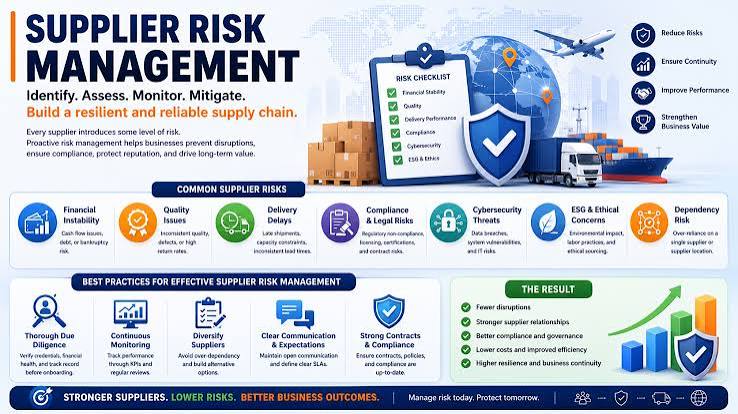
Common risks include:
- Supplier failure: A supplier may close, experience financial difficulties, or become unable to fulfill orders.
- Transportation delays: Road accidents, port congestion, fuel shortages, or vehicle breakdowns may delay deliveries.
- Natural disasters: Floods, storms, and other severe weather events can damage facilities and interrupt transport routes.
- Political or economic instability: Trade restrictions, currency fluctuations, or border delays may affect international supplies.
- Cyberattacks: Digital disruptions can prevent suppliers or logistics companies from processing orders and coordinating deliveries.
- Quality problems: Defective materials may require replacement, delaying production and increasing costs.
Review your purchasing and delivery processes to identify which disruptions would have the greatest impact on your operations.
2. Avoid Depending on a Single Supplier
Relying on one supplier can leave your business exposed if that supplier experiences a problem.
For example, a restaurant that purchases all its essential ingredients from one distributor could struggle to serve customers if the distributor suddenly runs out of stock.
Similarly, a construction company that depends on one supplier for a critical building material may face costly project delays.
Where practical, establish relationships with alternative suppliers that can provide essential goods when your primary source is unavailable.
Consider these measures:
- Identify at least one alternative supplier for critical materials.
- Verify the reliability and financial stability of potential suppliers.
- Compare delivery times, prices, and product quality.
- Check whether alternative suppliers can handle urgent orders.
- Keep supplier contact information and agreements up to date.
Having alternatives does not mean abandoning trusted suppliers. It means creating backup arrangements before a disruption occurs.
3. Maintain Appropriate Safety Stock
Safety stock refers to extra inventory kept to protect a business against unexpected demand or supply delays.
For example, a retailer that normally sells 100 units of a product each week might maintain additional stock to cover a temporary delay in replenishment.
The appropriate amount depends on how frequently the item is used, how quickly it can be replaced, and how much a shortage would affect the business.
However, holding too much inventory can increase storage costs, tie up working capital, and create losses if products expire or become outdated.
To manage inventory effectively:
- Identify products and materials that are essential to operations.
- Review historical sales and usage patterns.
- Consider supplier lead times and their reliability.
- Set minimum stock levels and reorder points.
- Review inventory regularly and adjust levels as conditions change.
The objective is to maintain enough stock to manage reasonable disruptions without unnecessarily increasing business expenses.
4. Build Strong Relationships With Suppliers
Good supplier relationships can help businesses identify problems earlier and find solutions more quickly.
Suppliers may be more willing to communicate openly, prioritize urgent orders, or suggest alternatives when they understand your business requirements and trust your organization.
Regular communication is especially important when purchasing goods with long delivery times or products affected by seasonal demand.
Ask suppliers about their production capacity, delivery schedules, contingency arrangements, and procedures for notifying customers about delays.
For important purchases, consider written agreements that clearly explain delivery deadlines, quality requirements, payment terms, and what happens if agreed obligations are not met.
Contracts cannot prevent every disruption, but clear expectations can reduce misunderstandings and help both parties respond more effectively.
5. Diversify Transportation and Delivery Options
A reliable supplier may still be unable to deliver goods if its transportation arrangements fail.
Businesses that depend on one courier, freight company, shipping route, or delivery vehicle may face significant delays when that option becomes unavailable.
Where possible, develop alternative transportation arrangements.
For example, a business that normally uses road transport might explore rail, air freight, or another suitable delivery provider for urgent or high-value shipments, depending on availability and cost.
Consider the following measures:
- Work with more than one suitable logistics provider.
- Identify alternative routes and delivery locations.
- Track shipments and monitor expected arrival dates.
- Allow additional time for international deliveries and customs procedures.
- Establish procedures for prioritizing urgent customer orders.
The most appropriate backup depends on the goods being transported, the delivery distance, the urgency of the shipment, and the additional cost involved.
6. Create a Supply Chain Emergency Plan
A supply chain emergency plan explains what your business will do when an essential supplier or delivery service becomes unavailable.
Without a clear plan, employees may waste valuable time deciding how to respond while customers wait for their orders.
Your plan should identify critical products, responsible employees, alternative suppliers, and procedures for communicating with customers.
For example, if a key supplier announces a two-week delay, your team should know whether to use existing inventory, purchase from a backup supplier, adjust production schedules, or temporarily offer alternative products.
A practical emergency plan should include:
- A list of critical supplies and suppliers.
- Backup purchasing and transportation arrangements.
- Emergency contact details.
- Spending approval procedures for urgent purchases.
- Customer notification procedures.
- Steps for prioritizing limited stock.
- A process for reviewing what happened after the disruption.
Review the plan periodically and update it whenever important suppliers, products, or business operations change.
7. Understand How Insurance Can Help
Insurance may help a business recover financially from certain losses associated with supplier and delivery disruptions. However, ordinary business insurance does not automatically cover every supply chain problem.
Several types of coverage may be relevant.
Business interruption insurance: This may cover certain lost income and additional operating expenses when business operations are interrupted by a cause covered under the policy. Some policies require physical damage to insured property, so a supplier’s failure alone may not qualify.
Contingent business interruption insurance: Depending on the policy, this may cover certain losses caused by physical damage to a qualifying supplier’s or customer’s property. Coverage often depends on specified conditions and may exclude disruptions that do not involve covered physical damage.
Marine cargo insurance: This can protect insured goods during covered transportation by sea and, depending on the policy, other transport methods. It may cover specified risks such as certain accidental losses or damage, subject to exclusions and conditions.
Trade credit insurance: This may protect a business against certain losses when customers fail to pay for goods or services because of covered commercial or political risks. It does not generally insure against supplier delivery delays.
Equipment breakdown insurance: This may cover certain sudden mechanical or electrical breakdowns of insured equipment. It can be relevant when production disruptions arise from covered equipment failures.
Before purchasing coverage, ask an insurance professional to explain exclusions, waiting periods, limits, deductibles, and any requirements concerning approved suppliers or transportation arrangements.
Insurance should complement operational planning, not replace it.
8. Monitor Suppliers and Supply Chain Performance
Businesses should regularly evaluate whether suppliers and delivery partners are meeting expectations.
Useful performance indicators include:
- Percentage of deliveries arriving on time.
- Frequency of stock shortages.
- Average supplier lead time.
- Number of defective or rejected deliveries.
- Cost of urgent replacement purchases.
- Time required to resolve delivery problems.
These measurements can reveal recurring weaknesses before they develop into major operational problems.
For example, if a supplier repeatedly misses delivery deadlines, your business may need to increase temporary safety stock, renegotiate delivery terms, or shift some orders to another supplier.
Technology can also help. Inventory management systems, shipment tracking tools, and purchasing software can improve visibility into stock levels and expected delivery dates.
Even a small business can start with a simple spreadsheet and a regular supplier review process.
9. Protect Cash Flow During Disruptions
Supply chain interruptions can create financial pressure even when a business remains operational.
A company may need to pay more for emergency purchases, arrange expensive alternative transportation, refund customers, or wait longer to receive revenue.
Maintaining adequate working capital can help the business manage these unexpected expenses.
Consider keeping an emergency cash reserve, monitoring upcoming payments, and reviewing the financial impact of delayed orders.
Where commercially appropriate, negotiate flexible payment terms with suppliers and avoid committing too much cash to slow-moving inventory.
Businesses should also estimate how long they could continue operating if a major supplier became unavailable.
This exercise can help identify financial weaknesses and determine how much emergency funding may be needed.
10. Communicate With Customers When Delays Occur
Even with good planning, some disruptions are unavoidable. How your business communicates during these situations can influence customer trust and loyalty.
If a delivery is delayed, inform affected customers as soon as reasonably possible.
Explain what is known, provide a realistic revised delivery estimate where possible, and describe the available options.
Depending on the circumstances, these options might include waiting for the delayed shipment, selecting an alternative product, or receiving a refund where required by the contract or applicable law.
Avoid promising delivery dates that your suppliers have not confirmed.
Clear communication helps customers make informed decisions and reduces misunderstandings, complaints, and avoidable disputes.
Final Thoughts
Supplier and delivery disruptions can affect sales, production, customer satisfaction, and business profitability. Although not every interruption can be prevented, businesses can reduce their exposure by identifying critical risks, diversifying suppliers, maintaining appropriate inventory, and preparing emergency plans.
Insurance may provide additional financial protection against specific covered losses, but the details of the policy matter. Businesses should understand exactly which disruptions are insured and which must be managed through operational planning.
Regular supplier reviews, reliable communication, and careful cash-flow management can also strengthen a company’s ability to respond when problems arise.
By preparing for supply chain disruptions before they happen, businesses can reduce unnecessary losses, protect customer relationships, and improve their ability to continue operating during difficult circumstances.