Choosing an insurance policy can be challenging, especially when different companies offer different prices, coverage limits, and benefits. A cheaper quote may appear attractive, but it could leave you paying more out of pocket when you need to make a claim.
On the other hand, an expensive policy is not automatically better. The real value of insurance depends on how well the coverage matches your needs, the exclusions that apply, and the insurer’s ability to meet its obligations.
Whether you are buying motor, health, home, life, or business insurance, comparing quotes carefully can help you find suitable protection without spending more than necessary.
1. Understand What Each Quote Covers
The first step is to identify exactly what each insurance quote includes.
Insurance policies can differ significantly even when they cover the same general risk. One motor insurance quote, for example, may provide comprehensive coverage, while another may cover only third-party liability.
Before comparing prices, check the types of losses and expenses covered by each policy.
Depending on the insurance type, relevant benefits may include:
- Damage to insured property.
- Theft or loss of insured belongings.
- Medical expenses.
- Liability for injury or damage to other people.
- Legal expenses, where included.
- Additional services such as roadside assistance or emergency accommodation.
Ask the insurer for a full quotation and the relevant policy documents. Do not rely exclusively on advertisements or verbal descriptions.
A clear understanding of the coverage will help you avoid comparing policies that offer very different levels of protection.
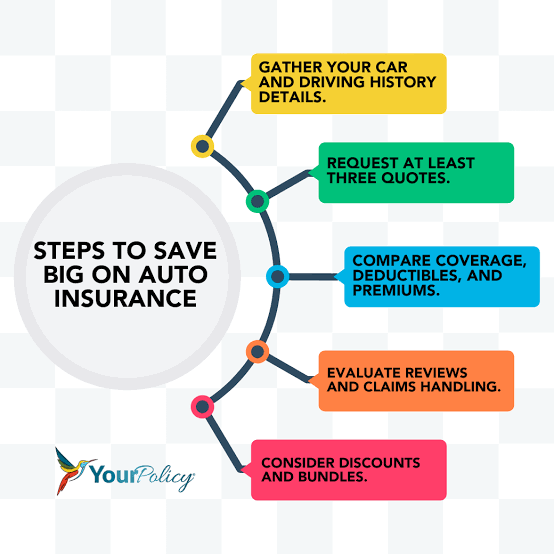
2. Compare Quotes on an Equal Basis
One of the most common mistakes is comparing insurance prices without checking whether the policies provide equivalent coverage.
For a fair comparison, request quotes using the same basic information and coverage requirements.
For example, when comparing home insurance, use the same property details, approximate rebuilding value, insured belongings, and desired protection limits.
When comparing motor insurance, check that the vehicle details, declared use, coverage type, and other relevant information are consistent.
Create a simple comparison table:
| Feature | Quote A | Quote B |
|---|---|---|
| Annual premium | Amount quoted | Amount quoted |
| Coverage limit | Amount stated | Amount stated |
| Deductible or excess | Amount stated | Amount stated |
| Key exclusions | Listed exclusions | Listed exclusions |
| Additional benefits | Included services | Included services |
| Payment terms | Quoted terms | Quoted terms |
Complete the table using the actual documents supplied by each insurer.
If one quote offers a lower premium because it provides less coverage, you can identify the difference before making a decision.
3. Check the Coverage Limits
A coverage limit is the maximum amount an insurer will pay for a particular insured loss or category of expenses, subject to the policy terms.
Choosing limits that are too low can leave you responsible for substantial costs.
For example, if your business has property worth $100,000 but the relevant insurance limit is only $50,000, the policy may not provide sufficient protection for a major loss. The final payment will also depend on the policy’s valuation rules, exclusions, deductibles, and any applicable underinsurance provisions.
When reviewing quotes, examine:
- The overall policy limit.
- Limits for individual items or categories.
- Annual limits for medical expenses.
- Liability limits.
- Sub-limits for specific events.
- Any restrictions on replacement or repair costs.
Do not assume that the largest headline limit applies to every type of loss.
Read the detailed benefit schedule to understand how much protection is available for the risks that matter most to you.
4. Pay Attention to Deductibles and Excesses
A deductible or excess is the amount you may have to contribute toward an insured claim, depending on the policy.
A policy with a higher excess may have a lower premium, but you could face greater out-of-pocket costs when a claim occurs.
For example, suppose two motor insurance quotes have similar coverage limits:
- Quote A has a premium of $600 and an excess of $200.
- Quote B has a premium of $500 and an excess of $500.
Quote B costs less upfront, but you would generally have to contribute more toward a claim subject to the excess.
These figures are illustrative only.
When comparing policies, check whether the excess applies per claim, per incident, or in another way. Some policies also impose different excesses for particular events, such as theft or certain types of accidental damage.
Choose an excess you could reasonably afford if you needed to make a claim.
5. Read the Exclusions Carefully
Insurance exclusions describe losses, circumstances, or events that the policy does not cover.
They are particularly important because a policy may appear comprehensive while excluding risks that are relevant to your situation.
For example:
- Home insurance may exclude damage caused by gradual deterioration or poor maintenance.
- Motor insurance may exclude certain uses of a vehicle that were not declared.
- Health insurance may impose waiting periods or restrictions on particular treatments.
- Business insurance may exclude certain cyber incidents or specific categories of interruption.
Exclusions vary by insurer and product, so never assume that a restriction in one policy applies identically to another.
Ask the insurer to explain any exclusion you do not understand. If a particular risk is important to you, find out whether additional coverage is available.
A slightly higher premium may be worthwhile if it provides meaningful protection that another policy excludes.
6. Look Beyond the Premium
The premium is important, but it is only one part of the total cost of insurance.
Other financial considerations may include:
- Deductibles or excesses.
- Co-payments.
- Administrative or policy fees.
- Installment charges.
- Costs for optional benefits.
- Expenses that fall outside the policy’s coverage.
- Premium increases at renewal.
For example, a health insurance plan with a low premium might have limited hospital benefits or require substantial co-payments.
Similarly, a business insurance policy might have an affordable premium but insufficient coverage for expensive equipment.
Consider both the upfront cost and the potential financial burden if something goes wrong.
The goal is not necessarily to find the cheapest policy. It is to obtain appropriate protection at a price you can sustain.
7. Research the Insurance Company’s Reputation
The quality of the insurer matters because you may depend on the company during a stressful or financially difficult situation.
Before choosing a policy, investigate whether the insurer is properly licensed in the relevant jurisdiction and whether it has a suitable record of handling claims and customer complaints.
Useful factors to consider include:
- Regulatory status.
- Financial strength, where reliable ratings are available.
- Clarity of policy documents.
- Claims procedures and documentation requirements.
- Customer service accessibility.
- Complaint-handling arrangements.
- Availability of local support.
Customer reviews can offer useful context, but individual experiences do not necessarily represent every policyholder’s experience.
Where possible, use information from the relevant insurance regulator and other reliable sources rather than relying on advertising alone.
A competitive quote is less useful if the insurer’s terms are unclear or its service does not meet your needs.
8. Understand Waiting Periods and Other Conditions
Some insurance policies contain waiting periods, eligibility requirements, or conditions that affect when benefits become available.
These conditions can be especially important in health, life, and certain specialized insurance products.
For example, a health insurance policy may require a waiting period before covering specified treatments. Another policy may offer different conditions, subject to its terms and applicable law.
Other policies may require inspections, security measures, maintenance records, or advance approval for particular expenses.
Before accepting a quote, ask:
- When does coverage officially begin?
- Are any benefits subject to waiting periods?
- What conditions must be met before a claim is payable?
- Are there restrictions on where or how services can be used?
- What documents are required when making a claim?
Understanding these requirements can prevent unpleasant surprises after you purchase the policy.
9. Ask About Discounts Without Sacrificing Protection
Insurance companies may offer discounts for factors such as bundling eligible policies, installing approved security equipment, maintaining a qualifying claims history, or paying premiums through certain arrangements.
Availability depends on the insurer, insurance type, and local market.
Ask whether you qualify for discounts, but compare the final coverage and total cost rather than focusing only on the advertised savings.
For example, combining home and motor insurance with one provider might reduce the overall premium. However, if one of the policies has significant coverage gaps, the combined arrangement may not be the best fit.
Also check whether discounts are temporary, whether they affect renewal pricing, and whether additional fees apply.
The objective is to reduce costs while preserving the protection you actually need.
10. Ask Questions Before Signing
If any part of a quote is unclear, seek clarification before paying or accepting the policy.
Useful questions include:
- What are the most important exclusions?
- What is the maximum amount payable for my main risks?
- How much would I pay out of pocket after a claim?
- Can the premium change at renewal?
- What happens if I miss a payment?
- How do I report a claim?
- Which documents will I need?
- Can I add optional coverage if my needs change?
Request important explanations in writing so that you have a clear record of what was communicated.
Review the final policy documents before relying on the coverage. Make sure the policy details match the information and benefits you agreed to when obtaining the quote.
Final Thoughts
Comparing insurance quotes carefully can help you avoid paying for unsuitable coverage or choosing a policy that leaves you exposed to significant financial losses.
Start by comparing equivalent benefits, coverage limits, deductibles, exclusions, and payment conditions. Then evaluate the insurer’s reliability, claims procedures, and the total cost of maintaining the policy.
Do not let the lowest premium make the decision for you. A suitable policy should balance affordability with meaningful protection against the risks you face.
Before purchasing insurance, take the time to understand what each quote promises, what it excludes, and how it will protect you when a covered loss occurs.