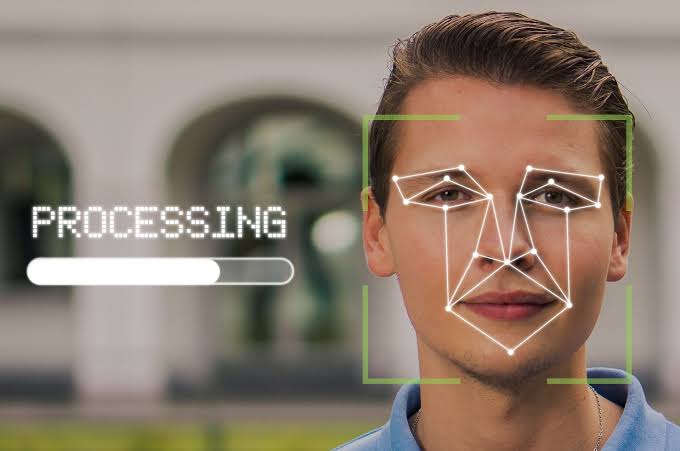
Facial recognition has become an increasingly common part of modern life. Smartphones use it to unlock screens, airports deploy it to help verify travelers’ identities, and businesses use it in security systems. Some public authorities also use facial recognition to identify people in photographs or video footage.
The technology relies on artificial intelligence to analyze facial features and compare them with images stored in a database or provided for verification. Although these systems have improved significantly, their accuracy is not perfect.
Understanding how facial recognition works, what affects its reliability, and where it can fail is essential as the technology becomes more widely used.
1. What Is Facial Recognition?
Facial recognition is a technology that uses computer vision and machine learning to identify or verify a person based on their face.
There are two main ways it is used.
Facial verification checks whether a face matches a claimed identity. For example, a smartphone may compare a live face with the facial data registered by its owner.
Facial identification attempts to determine who a person is by comparing their face against multiple images in a database. This approach may be used in security investigations or other identity-related applications.
Although these processes are related, identification generally presents different challenges because the system may need to search through many possible matches.
2. How Does Facial Recognition Work?
Modern facial recognition systems typically follow several steps.
Step 1: Capturing an image. A camera records a person’s face in a photograph or video frame.
Step 2: Detecting the face. Computer vision software identifies the area of the image containing the face.
Step 3: Analyzing facial features. An AI model processes patterns in the face and converts them into a numerical representation, often called a facial embedding.
Step 4: Comparing representations. The system compares this representation with one or more stored representations to estimate how closely they match.
Step 5: Making a decision. Depending on the application, the system may accept a match, reject it, or request another verification attempt.
The software does not necessarily compare individual features in the same way a human would. Instead, it learns complex patterns from training data to distinguish between faces.
3. How Accurate Is Facial Recognition?
Facial recognition can achieve very high accuracy under suitable conditions, particularly in controlled verification systems with good-quality images.
However, there is no single accuracy figure that applies to every facial recognition system. Performance depends on the algorithm, the quality of the images, the comparison method, and the conditions under which the system operates.
Two important errors can occur.
- False match: The system incorrectly determines that two different people are the same person.
- False non-match: The system fails to recognize that two images belong to the same person.
These errors can have different consequences. A false match in a security investigation could lead to a person being wrongly suspected, while a false non-match could prevent an authorized user from accessing a device or service.
Accuracy also depends on the decision threshold. A system configured to accept more potential matches may reduce missed matches but increase false matches. A stricter threshold may have the opposite effect.
4. What Factors Affect Facial Recognition Accuracy?
Several factors can influence how well a system recognizes faces.
Lighting conditions: Poor lighting, strong shadows, and glare can make facial details harder to analyze.
Camera quality: Blurry images, low resolution, and unusual camera angles can reduce reliability.
Facial changes: Aging, facial hair, hairstyles, and certain changes in appearance may affect comparisons, although modern systems can handle some variations.
Obstructions: Sunglasses, masks, and other objects covering parts of the face can make recognition more difficult.
Database image quality: Even a strong algorithm may struggle if the reference image is outdated or significantly different from the captured image.
Training data: The diversity and quality of the data used to develop an AI model can influence how well it performs across different demographic groups and real-world conditions.
Testing a system in realistic environments is therefore essential before relying on it for important decisions.
5. Can Facial Recognition Be Biased?
Yes. Research and evaluations have found that some facial recognition systems perform differently across demographic groups.
Differences in training data, image quality, algorithm design, and testing conditions can contribute to these disparities. Some systems have historically produced higher error rates for certain demographic groups, although performance varies by system and task.
This matters because facial recognition may be used in situations involving access to services, identity verification, policing, or border control.
A system that works well on average may still make more mistakes for particular groups. Organizations should therefore evaluate performance across relevant demographic groups rather than relying only on a single overall accuracy score.
Independent testing, representative training data, human oversight, and clear procedures for challenging incorrect decisions can help reduce potential harm.
6. Privacy and Security Concerns
Facial recognition raises privacy questions because faces are difficult to change. Unlike a password, a person’s face is a physical characteristic that remains recognizable over time.
Collecting facial images without meaningful consent can create concerns about surveillance and the use of personal information. Large facial databases may also become attractive targets for cyberattacks.
There are security risks, too. Some systems may be vulnerable to photographs, videos, masks, or other presentation attacks if they lack effective safeguards. More advanced systems may use liveness detection to help determine whether the camera is observing a real person rather than a reproduction.
However, liveness detection is not foolproof. Strong security requires multiple protective measures, careful data handling, and regular testing.
7. Where Is Facial Recognition Heading?
Advances in AI are making facial recognition systems more capable of handling different lighting conditions, facial angles, and changes in appearance.
The technology may become more integrated into digital banking, travel, workplace access, and personal devices. Improvements in on-device processing could also allow some systems to perform facial comparisons without sending facial data to remote servers.
At the same time, stronger privacy protections and clearer rules governing its use will become increasingly important.
Organizations will need to consider whether facial recognition is necessary for a particular task, whether less intrusive alternatives are available, and how to protect people when errors occur.
Final Thoughts
Facial recognition is a powerful application of artificial intelligence, capable of verifying identities quickly and conveniently in many situations. Yet its accuracy depends on more than the sophistication of its software.
Image quality, environmental conditions, system settings, demographic differences, and the intended use can all influence its performance. Even highly capable systems can produce incorrect results.
As facial recognition becomes more common, it should be treated as a useful tool rather than an infallible judge of identity. Responsible deployment requires rigorous testing, strong privacy protections, and appropriate human oversight—especially when a mistaken identification could seriously affect someone’s life.