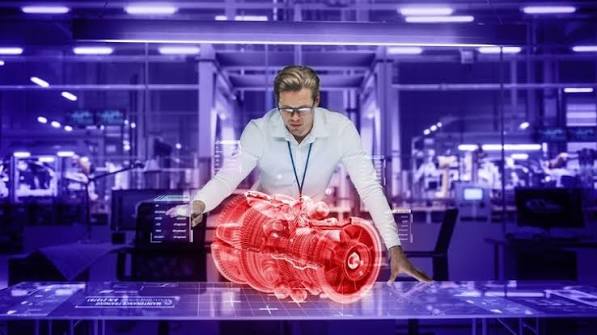
Imagine designing a new aircraft engine, factory robot, or industrial machine and testing how it performs before constructing the physical version. Engineers can increasingly do this using digital twins—virtual representations of real-world objects, systems, or processes.
Digital twins combine computer models, engineering data, and simulations to help developers understand how machines might behave under different conditions. Instead of relying entirely on physical prototypes, engineers can explore designs, identify weaknesses, and make improvements in a virtual environment.
As manufacturing and engineering become more data-driven, digital twins are helping reduce development risks, improve efficiency, and accelerate innovation.
1. What Is a Digital Twin?
A digital twin is a virtual model of a physical object or system that represents its structure, behavior, or performance.
Unlike a simple 3D drawing, a digital twin can incorporate information about how a machine operates. Depending on its purpose, it may simulate movement, temperature, pressure, vibration, energy consumption, or mechanical stress.
For example, an engineering team developing an electric motor could create a digital twin to examine how the motor responds to different speeds and operating temperatures.
Some digital twins are used during the design stage, while others are connected to sensors on existing equipment to reflect its actual operating conditions. A model used before a machine exists is often based primarily on simulations and engineering assumptions rather than live sensor data.
2. How Do Digital Twins Work?
Creating a useful digital twin typically involves several steps.
Building the virtual model: Engineers develop a digital representation using computer-aided design software, engineering specifications, and other technical information.
Adding physical behavior: Simulation software models how the machine may respond to forces, heat, movement, electrical currents, or other conditions.
Running virtual tests: Engineers change variables to explore different operating scenarios, including situations that could be difficult, expensive, or dangerous to reproduce physically.
Analyzing results: The team examines the results to identify design weaknesses, compare alternatives, and determine where improvements may be necessary.
For digital twins of existing machines, sensor data can also be used to compare predicted performance with real-world behavior and update the model.
3. Testing Machines Before Building Them
One of the biggest advantages of digital twins is that engineers can evaluate designs before committing to expensive manufacturing work.
Consider a company developing an industrial robot. Engineers could simulate the robot lifting different loads, moving through a workspace, and operating at different speeds.
The model might reveal that a particular component experiences excessive stress or that the robot consumes more energy than expected.
Engineers could then modify the design and repeat the simulation before producing a physical prototype.
This approach is useful because traditional prototype testing often requires materials, specialized equipment, and considerable time. Virtual testing allows teams to investigate many design alternatives more quickly, although physical prototypes and real-world testing are still needed to validate important results.
4. Improving Safety and Reliability
Digital twins can help engineers investigate how machines might behave under demanding conditions.
For example, they can simulate high temperatures, repeated mechanical loads, pressure changes, or vibration that could contribute to equipment failure.
In aircraft engineering, digital models can support the analysis of engine components and structural behavior. In manufacturing, they can help evaluate machinery performance and identify potential problems before equipment enters service.
These simulations can reveal weaknesses that might otherwise remain undiscovered until physical testing.
However, a digital twin is only as reliable as its underlying data, assumptions, and models. Engineers must validate predictions against experiments and real-world measurements before relying on them for safety-critical decisions.
5. Reducing Costs and Development Time
Developing complex machines can be expensive, particularly when each design change requires manufacturing a new prototype.
Digital twins can reduce the number of physical prototypes needed by allowing engineers to investigate many possible configurations virtually.
They can also help teams identify design problems earlier, when changes are often less expensive to implement.
For manufacturers, this may shorten development cycles, reduce material waste, and improve collaboration between design, production, and maintenance teams.
Nevertheless, digital twin software, computing resources, specialized expertise, and model development also involve costs. The financial benefits depend on the complexity of the project and how effectively the technology is implemented.
6. The Role of Artificial Intelligence
Artificial intelligence is expanding what digital twins can do.
AI systems can analyze large amounts of simulation and sensor data to identify patterns, estimate equipment performance, and help engineers explore potential improvements.
For example, an AI-assisted digital twin of a production line could help determine how changes in machine speed might affect output, energy use, and equipment wear.
When connected to operational data, digital twins may also support predictive maintenance by identifying patterns associated with developing faults.
These capabilities can help engineers investigate problems more efficiently. However, AI-generated recommendations still require careful evaluation, particularly when incorrect predictions could damage equipment or threaten safety.
7. Where Digital Twins Are Being Used
Digital twins are finding applications across several industries.
- Aerospace: Engineers use digital models to study aircraft components, engines, and complex operating conditions.
- Automotive manufacturing: Virtual models help evaluate vehicle designs, production lines, and manufacturing processes.
- Energy: Digital twins can support the analysis of turbines, power systems, and industrial equipment.
- Healthcare technology: Virtual models of medical devices and selected biological systems can help researchers study performance, although their accuracy and clinical usefulness vary.
- Construction and infrastructure: Digital representations can help teams understand how buildings, bridges, and other structures are designed and maintained.
As computing power and simulation tools improve, digital twins could become more accessible to smaller engineering teams and manufacturers.
Final Thoughts
Digital twins are changing how engineers design, test, and improve machines. By creating virtual models that simulate real-world behavior, developers can explore designs, identify potential failures, and make informed decisions before investing in physical construction.
The technology cannot eliminate every engineering risk, and simulations must be supported by reliable data and real-world testing. Nevertheless, digital twins offer a valuable way to make complex development processes more efficient and less wasteful.
As artificial intelligence, sensors, and simulation software advance, digital twins could become an increasingly important part of building the next generation of machines, from factory robots to aircraft engines and renewable energy equipment.